
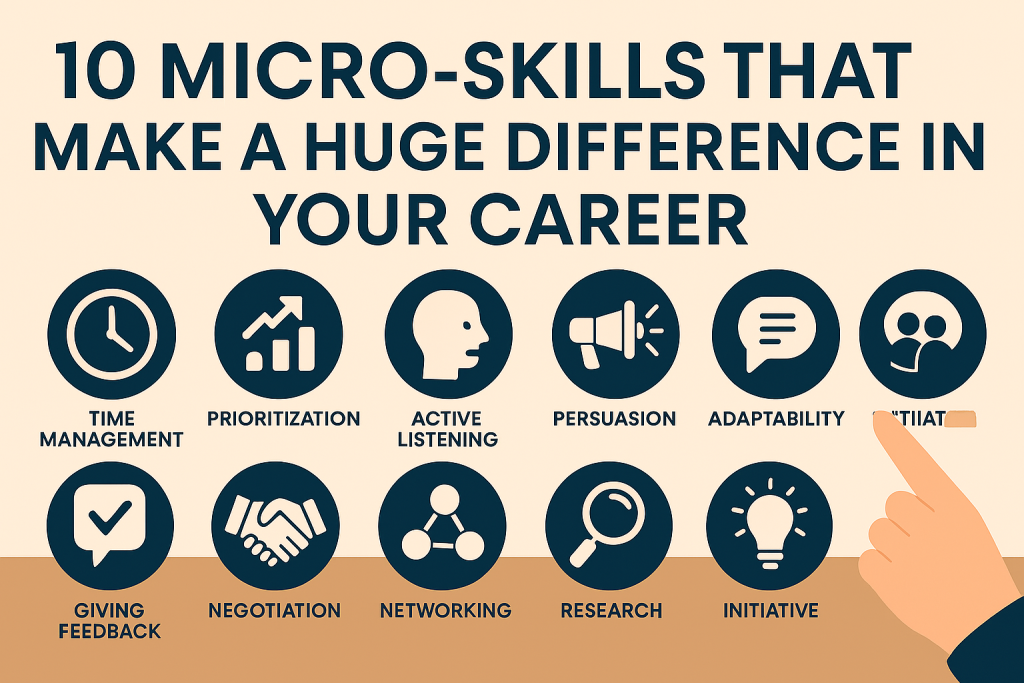
We’ve all heard the saying “Rome wasn’t built in a day.” The same truth applies to building a successful career. While we often focus on big achievements like landing a promotion or completing a major project, it’s the small daily actions that create the foundation for long-term success.
These small actions are what we call micro-skills. They’re the tiny habits and behaviors that, when practiced consistently, transform how others see us at work and how we perform in our roles.
In today’s competitive job market, technical skills alone aren’t enough. Employers want professionals who can adapt, communicate well, and work effectively with teams. The professionals who master these micro-skills stand out from the crowd and advance faster in their careers.
In this blog, we’ll explore 10 powerful micro-skills that can change your career trajectory. Each one takes just minutes to practice but delivers results that last for years.
What Are Micro-Skills and Why Do They Matter?
Micro-skills are small, specific actions you can repeat every day. Unlike technical skills that require months or years to master, micro-skills are behaviors you can start practicing immediately.
Think of the difference between learning to code (a macro skill) and remembering to make eye contact during conversations (a micro-skill). Both matter, but micro-skills are easier to develop and have immediate impact.
Here’s why micro-skills are so powerful in the workplace:
They improve your relationships. When you listen better or communicate more clearly, people want to work with you. Strong workplace relationships lead to better projects, recommendations, and opportunities.
They boost your productivity. Small habits like setting daily goals or managing your time better help you get more done with less stress.
They make you more visible. Managers notice employees who take initiative, solve problems, and adapt well to change. These behaviors help you stand out during performance reviews and promotion discussions.
Research shows that soft skills like communication and emotional intelligence are becoming more valuable than ever. Companies can teach technical skills, but they prefer to hire people who already have strong interpersonal abilities.
10 Micro-Skills That Make a Huge Difference in Your Career
1. Active Listening
What it is: Active listening means giving your full attention when someone speaks. You focus on understanding their message instead of planning what you’ll say next.
Why it matters: Most workplace problems come from misunderstandings. When you listen actively, you catch important details others miss. This prevents mistakes and shows respect for your colleagues’ ideas.
How to develop it:
- Put away your phone during conversations
- Ask clarifying questions like “Can you tell me more about that?”
- Repeat back what you heard: “So you’re saying the deadline moved to Friday?”
- Wait for the person to finish speaking before responding
Real-world impact: Sarah, a project manager we worked with, started using active listening in her team meetings. Within two months, her team’s efficiency improved by 30% because they were solving the right problems instead of working on assumptions.
2. Clear and Concise Communication
What it is: Getting your point across quickly and clearly, whether you’re writing emails, giving presentations, or talking in meetings.
Why it matters: Busy professionals appreciate when you respect their time. Clear communication prevents confusion and makes you look professional and organized.
How to develop it:
- Use the “bottom line up front” approach – start with your main point
- Keep emails under 100 words when possible
- Replace jargon with simple words
- Practice the “elevator pitch” version of your ideas
Real-world impact: Clear communicators get faster responses to their emails and more support for their ideas. They’re also more likely to be chosen for client-facing roles and leadership positions.
3. Daily Goal Setting
What it is: Taking 5 minutes each morning to write down 2-3 specific things you want to accomplish that day.
Why it matters: Goals give you direction and help you stay focused when distractions arise. They also create a sense of accomplishment that builds momentum.
How to develop it:
- Write goals that are specific and measurable
- Include both urgent tasks and important long-term work
- Review yesterday’s goals before setting new ones
- Celebrate when you complete your daily goals
Real-world impact: People who set daily goals complete 42% more tasks than those who don’t. They also report feeling less stressed and more in control of their workload.
4. Industry-Related Reading
What it is: Spending 10-15 minutes daily reading articles, blogs, or reports related to your industry or role.
Why it matters: Industries change quickly. Professionals who stay informed about trends and developments become go-to resources for their teams and are better prepared for strategic discussions.
How to develop it:
- Subscribe to 2-3 industry newsletters
- Follow thought leaders on LinkedIn
- Set aside reading time during your commute or lunch break
- Share interesting insights with your team
Real-world impact: Mark, a marketing professional, started reading industry reports daily. Within six months, his manager began asking him to lead strategy sessions because he always had fresh insights about market trends.
5. Networking Micro-Habits
What it is: Small, regular actions that help you build and maintain professional relationships.
Why it matters: Most job opportunities come through personal connections. Building your network gradually is less overwhelming than trying to network intensively when you need a new job.
How to develop it:
- Send one “checking in” message per week to a former colleague
- Attend one networking event per month
- Introduce two people who should know each other
- Share and comment on colleagues’ LinkedIn posts
Real-world impact: Jennifer landed her dream job because a former coworker she stayed in touch with recommended her for an opening. The relationship started with occasional coffee meetings and LinkedIn interactions.
6. Time Management and Prioritization
What it is: Using simple systems to organize your work and focus on the most important tasks first.
Why it matters: Good time management prevents burnout and helps you deliver quality work on schedule. It also shows your manager that you can handle more responsibility.
How to develop it:
- Use the “Eisenhower Matrix” to categorize tasks by urgency and importance
- Block time for deep work when you’re most focused
- Say no to meetings that don’t require your input
- Take short breaks every 90 minutes to maintain focus
Real-world impact: Professionals with strong time management skills are 25% more likely to be promoted because they consistently meet deadlines and produce high-quality work.
7. Reflection and Feedback
What it is: Regularly thinking about what went well and what could improve in your work, and actively seeking input from others.
Why it matters: Self-aware professionals grow faster because they learn from both successes and mistakes. They’re also easier to work with because they’re open to suggestions.
How to develop it:
- Spend 10 minutes each Friday reviewing the week’s wins and challenges
- Ask for specific feedback: “How could I have made that presentation more engaging?”
- Keep a “lessons learned” journal
- Thank people who give you constructive feedback
Real-world impact: Employees who seek feedback regularly receive 23% higher performance ratings because they show commitment to improvement and make fewer repeated mistakes.
8. Problem-Solving and Critical Thinking
What it is: Approaching challenges with curiosity and using logical steps to find solutions instead of jumping to conclusions.
Why it matters: Every workplace has problems. Employees who can think through issues carefully and propose solutions are valuable assets to their teams.
How to develop it:
- Ask “What’s really causing this problem?” before proposing solutions
- Consider multiple options before making decisions
- Look for data to support your reasoning
- Practice the “5 Whys” technique to get to root causes
Real-world impact: Problem-solvers often become team leaders because managers trust them to handle challenges independently. They’re also more likely to be included in strategic planning discussions.
9. Adaptability and Initiative
What it is: Staying flexible when things change and taking action to improve situations without being asked.
Why it matters: Change is constant in modern workplaces. Employees who adapt well and take initiative are seen as leaders and are more secure in their positions.
How to develop it:
- View changes as opportunities to learn new skills
- Volunteer for projects outside your normal responsibilities
- Suggest improvements to processes you use regularly
- Stay calm and solution-focused when plans change
Real-world impact: During a company reorganization, Lisa volunteered to train new team members on existing processes. Her initiative led to a promotion because leadership saw her as someone who could help the company through difficult transitions.
10. Non-Verbal Communication and Empathy
What it is: Being aware of your body language and facial expressions, and paying attention to others’ emotional states.
Why it matters: Most communication happens through body language and tone. People who read these signals well and respond appropriately build stronger relationships and avoid conflicts.
How to develop it:
- Make appropriate eye contact during conversations
- Match your tone to your message
- Notice when colleagues seem stressed or frustrated
- Offer support when you see someone struggling
Real-world impact: Teams led by empathetic managers have 50% lower turnover rates. Employees who show empathy are also more likely to be promoted to leadership roles.
How to Build These Micro-Skills into Your Routine
Starting with all 10 micro-skills at once is overwhelming. Instead, choose 1-2 skills that would make the biggest difference in your current role.
Start small. Commit to practicing your chosen micro-skill for just 5 minutes per day. Success builds on itself, and small wins create momentum for bigger changes.
Use habit stacking. Attach your new micro-skill to something you already do regularly. For example, “After I pour my morning coffee, I’ll write down my three daily goals.”
Track your progress. Keep a simple checklist or use a habit-tracking app to monitor your consistency. Seeing your streak of successful days motivates you to continue.
Find an accountability partner. Share your goal with a trusted colleague and check in weekly about your progress. Having someone else invested in your success increases your chances of sticking with the habit.
Be patient with yourself. Research shows it takes an average of 66 days to form a new habit. Expect some setbacks, but don’t let them derail your progress completely.
The Compound Effect of Micro-Skills
The real power of micro-skills comes from practicing them consistently over time. Like compound interest in a savings account, small daily improvements create dramatic results over months and years.
Consider David, a software developer who decided to focus on three micro-skills: active listening, daily goal setting, and seeking feedback. He practiced each skill for just 10 minutes per day.
After three months, his project manager noticed that David was completing tasks more efficiently and collaborating better with the design team. After six months, David was asked to lead a new project because his manager trusted his communication skills and reliability.
Within a year, David was promoted to senior developer and received a 20% salary increase. The promotion wasn’t because he learned new programming languages, but because he developed the interpersonal skills that made him a valuable team leader.
This is the compound effect in action. Small daily improvements in how you communicate, organize your work, and relate to others create opportunities that wouldn’t exist otherwise.
Your career advancement doesn’t depend only on big achievements. It’s built on the foundation of smart daily actions that show your professionalism, reliability, and growth mindset.
Conclusion
Building a successful career isn’t about making dramatic changes overnight. It’s about consistently practicing small behaviors that demonstrate your professionalism and help you work more effectively with others.
The 10 micro-skills we’ve covered – from active listening to showing empathy – are all within your control. You don’t need special training or expensive tools to start developing them. You just need to commit to small, daily improvements.
Remember: small wins every day lead to long-term career growth. The professionals who advance fastest aren’t necessarily the most talented, but they’re often the ones who master these fundamental interpersonal skills.
Choose one or two micro-skills from this list and start practicing them tomorrow. Your future self will thank you for the investment you make today.
Which micro-skill will you work on first? We’d love to hear about your experience in the comments below.
About the Author: This content was developed by professional skill development consultants with over 15 years of experience helping professionals advance their careers through improved interpersonal skills and workplace effectiveness.
References: [1] Harvard Business Review – “The Skills You Need to Succeed at Work Are Changing” [2] McKinsey & Company – “Communication: A Key Leadership Competency” [3] World Economic Forum – “The Future of Jobs Report 2023” [4] Dale Carnegie – “How to Win Friends and Influence People” (Research Studies) [5] American Management Association – “Critical Skills Survey” [6] LinkedIn Learning – “Workplace Learning Report 2024” [7] Center for Creative Leadership – “The Challenges Leaders Face Around the World” [8] Harvard Business School – “Time Management and Productivity Studies” [9] Emotional Intelligence Research – “EQ in the Workplace” [10] Gallup – “State of the American Workplace” [11] Society for Human Resource Management – “Employee Job Satisfaction Survey” [12] MIT Sloan Management Review – “The Digital Transformation of Professional Skills”